Études germaniques
La revue Études germaniques a pour but d’informer avec un grand souci d’impartialité et d’objectivité scientifique tous ceux qui s’intéressent à la vie du monde germanique (Allemagne, Suisse, pays scandinaves et néerlandais, études yiddish et judéo-allemandes), aussi bien sur des questions qui touchent à la linguistique, à la littérature, à l’histoire, à la philosophie, à l’art, à la religion — en un mot à la civilisation — qu’à celles qui relèvent de l’actualité et qui sont étudiées dans un esprit de savants et non de partisans.
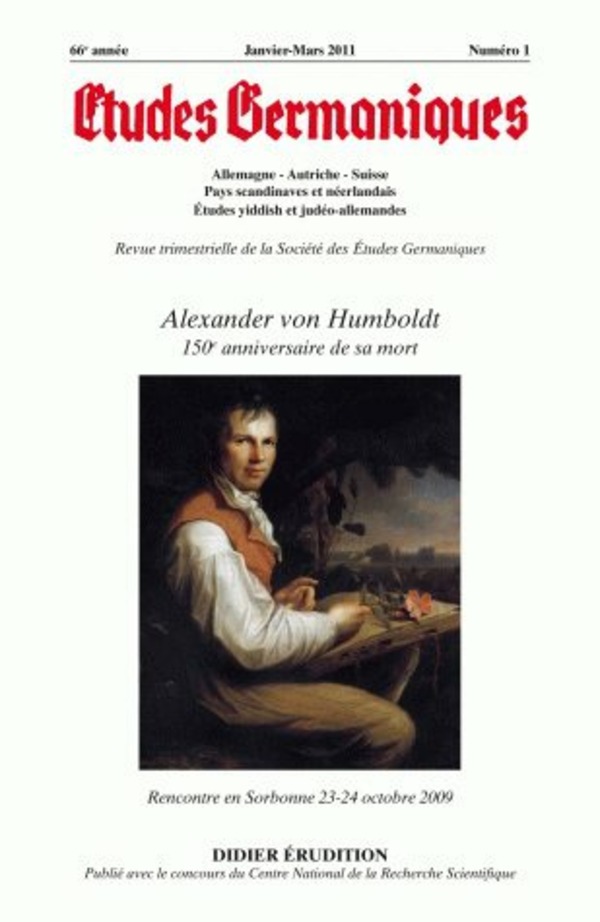
Études germaniques - N°1/2011
Alexander von Humboldt - 150e anniversaire de sa mort
Ulrich PÄSSLER - Alexander von Humboldt. Savant entre la France et la Prusse During the time of eight extended visits to Paris between 1830 and 1848, Alexander von Humboldt acted as an intermediary between the scientific communities of Prussia and ...
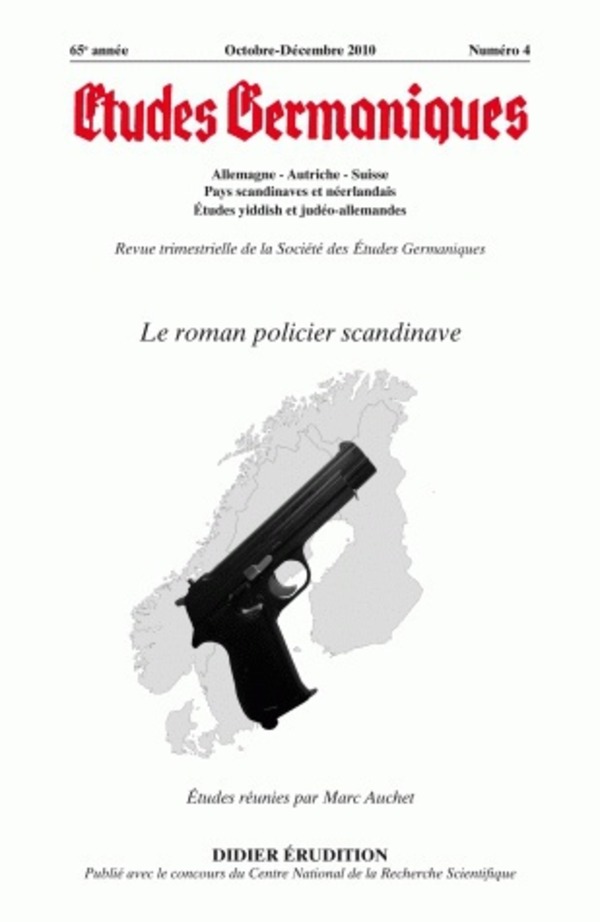
Études germaniques - N°4/2010
Le roman policier scandinave
Hans H. SKEI - Le roman policier norvégien dans le contexte scandinave hier et aujourd'hui In this essay I offer a brief introduction to Scandinavian crime writing, with heavy emphasis on the last couple of decades, before I move on to a brief and ...
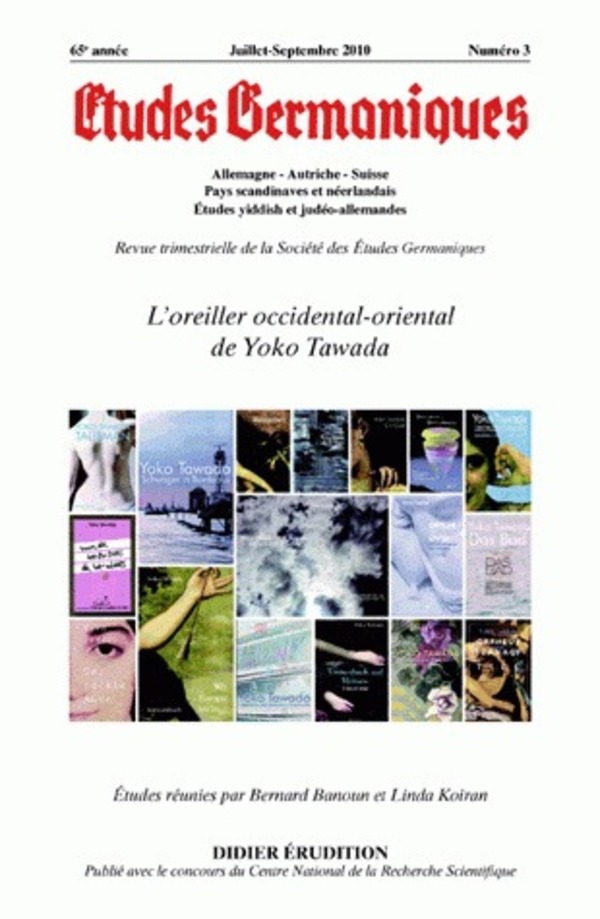
Études germaniques - N°3/2010
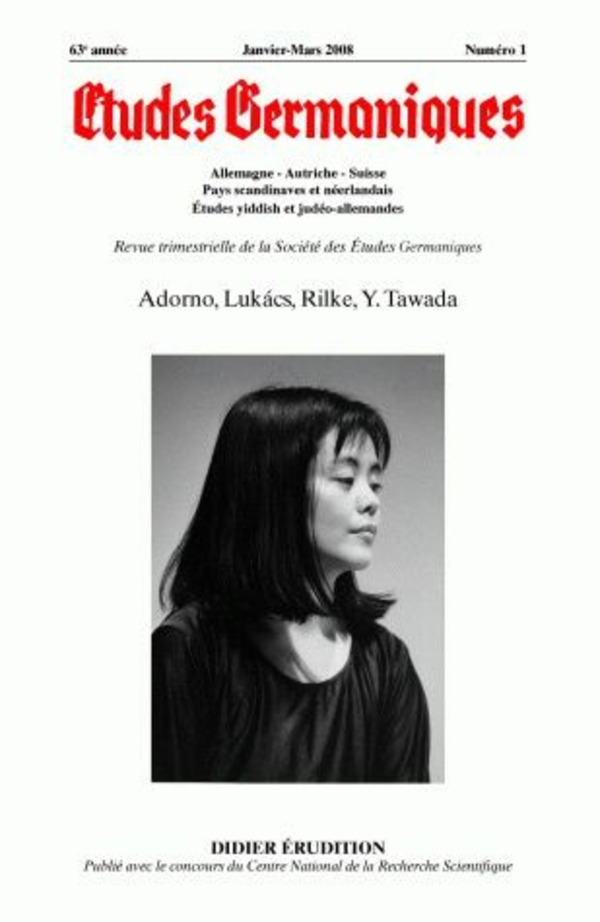
L'oreiller occidental-oriental de Yoko Tawada
Cécile SAKAI Tawada Yôko et le mystère de l'écriture The paper « Tawada Yôko and the Enigma of Writing » develops an evaluation of Tawada's specific approaches to the question of the literary language through one of its aspects : writing as the ...
Études germaniques - N°2/2010
La littérature autrichienne et l'État (XVIIe - XXe siècles)
Anne WAGNIART Das Projekt einer deutschsprachigen Kaiserliteratur im Schlesien des 17. Jahrhunderts The Silesian Renaissance project of an imperial literature in German was conceived to serve the leader of the Protestant Union, Frederick V of the ...
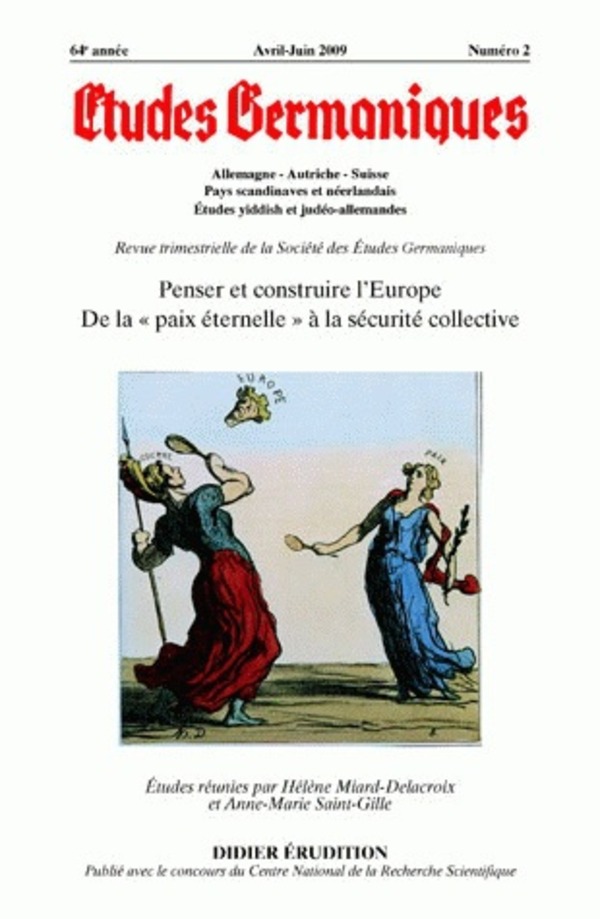
Études germaniques - N°2/2009
Penser et construire l'Europe. De la "paix éternelle" à la sécurité collective
Paul Michael LÜTZELER, Der Europadiskurs der Schriftsteller als Plädoyer für den Frieden The discourse on Europe developed as a discourse on peace during and after the great wars between the 17th and the 20th century. It was a discourse in which ...
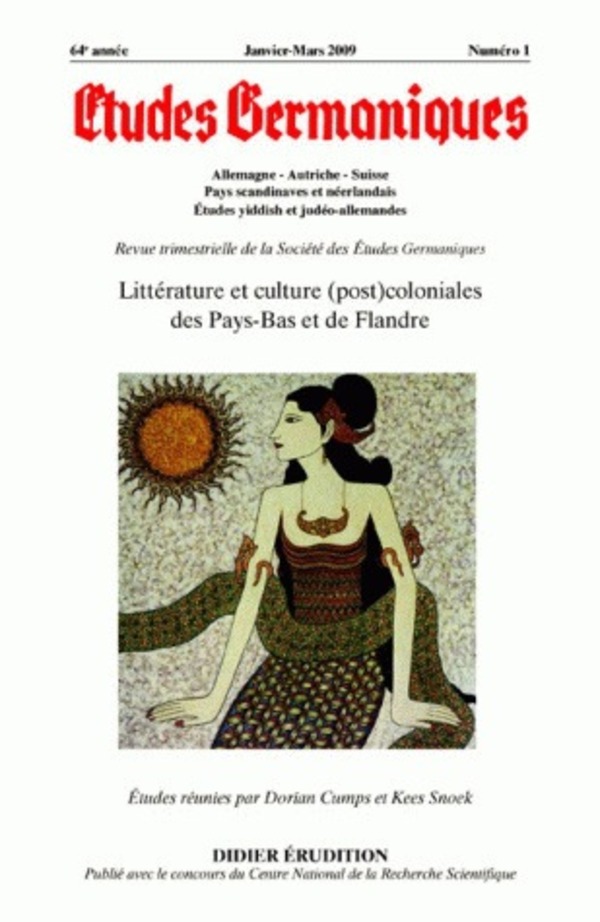
Études germaniques - N°1/2009
Littérature et culture (post)coloniales des Pays-Bas et de Flandre
Luc BERGMANS, Le roman Max Havelaar de Multatuli, un pusaka The novel Max Havelaar, written by Multatuli (the penname of Edward Douwes Dekker) in 1860, has always been perceived as, above all, denouncing the oppression suffered by the people of the ...