
Résultat de votre recherche : etudes chinoises
Études de linguistique appliquée - N°1/2015
La dictionnairique
Christophe REY, Dictionnairique et édition au siècle des lumièresRésumé : À travers l'évocation du contexte lexicographique des Lumières et plus particulièrement un retour sur les conditions d'élaboration et de publication de l'Encyclopédie de Diderot et d'Alembert et de l'Encyclopédie Méthodique de Charles-Joseph Panckoucke, cet article se pro-pose de mettre en...
Études anglaises - N°1/2015
Agnès DERAIL-IMBERTÉros et Arès : les enfants de la guerre dans Billy Budd, Sailor de Melville Cette étude se propose de lire Billy Budd, Sailor comme une fable juridique qui dramatise, dans un double contexte de guerre et de mutinerie, le conflit entre la violence d'une innocence exceptionnelle (Billy) et...
Études de linguistique appliquée - N°4/2014
Dictionnaires et mots d'ailleurs. Dire, décrire la langue de l'autre
Frédéric TREFFEL, PARLERS AFRICAINS D'HIER ET D’AUJOURD’HUI : DE LA NÉGRITUDE A LA NÉO-GRITUDE Résumé : Longtemps l’Afrique fut la grande absente du discours de l’autre, en marge de la raison, du discours, et de la langue. Cette perspective s’est cependant peu à peu modifiée au cours des dernières décennies...
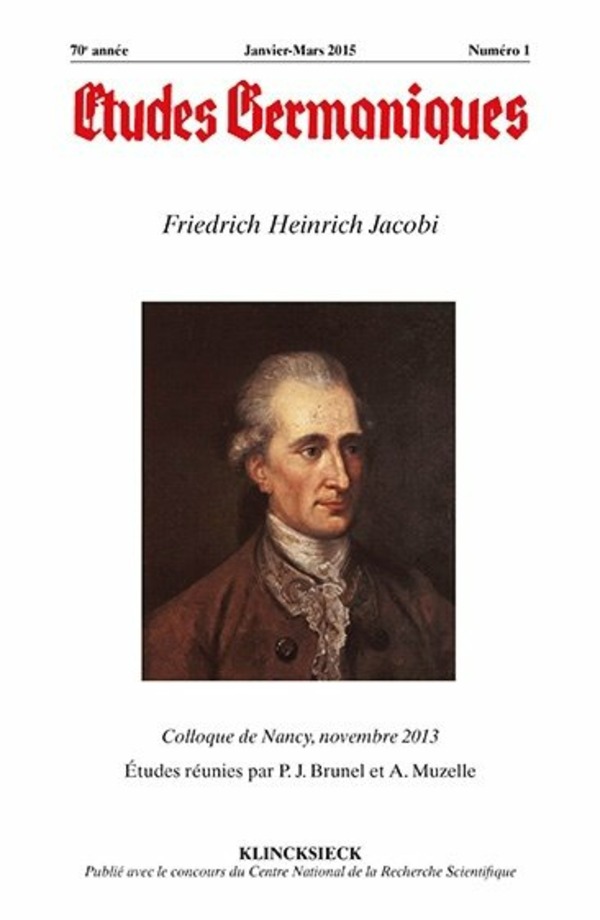
Études germaniques - N°1/2015
Friedrich Heinrich Jacobi
Pierre Jean BRUNEL : Oti et dioti. Les enjeux métaphysiques de l'éthique aristotélicienne dans Woldemar de Friedrich Heinrich Jacobi While Aristotle's authority is being challenged by modern philosophy, Jacobi quotes from his Nicomachean Ethics in Woldemar. Daniel Jenisch's edition of the Aristotle Ethics proves to be a major source for...
Études anglaises - N°4/2014
Text and Music in Early Modern England
Natalie ROULON Music and Gender in All's Well That Ends WellAll’s Well That Ends Well may not be the most musical of Shakespeare’s works, but the music performed or referred to in the play is important in that it contributes to constructing the strict gender divide which prevailed in the...
Études germaniques - N°4/2014
Hommage à Friederike Mayröcker Pour son 90e anniversaire
Inge ARTEEL Biographie einer BiographielosenBased on my experiences writing a monographical biography of Friederike Mayröcker I explore some dilemma's and paradoxes of biographical writing, both in the texts of Mayröcker herself and in the writing about her texts. In her prose texts as well as in paratexts Mayröcker cites and...
Études anglaises - N°3/2014
Marie-Françoise ALAMICHEL : "This wyde world, which that men seye is round": Movement and Meaning in The Franklin's TaleGisèle VENET : More “flies in amber”? or, of Topicalities, Dictionaries and Poetics in Love's Labour's LostAlexandra POULAIN : “False impression[s]”: Writing in The Importance of Being Earnest Marta DVORAK : “the...
Études germaniques - N°3/2014
F. Schiller, Novalis, Rilke/Mallarmé, J. Roth, Traduction et politique culturelle
Daniel DROIXHE Le théâtre allemand dans les limbes de la reconnaissance La chronique du Journal encyclopédique, du Hanswurst à Klopstock (1756-1762) The study follows the various stages through which the Journal encyclopédique records the claims and reforms having allowed the XVIIIth century German theatre to shake off the « great...
Études de linguistique appliquée - N°3/2014
Insécurité linguistique en éducation: Approche sociologique comparée des élèves issus du Maghreb
RÉduire l'insÉcuritÉ linguistique des ÉlÈves par une transposition didactique de la pluralitÉ sociolinguistique. Pour de nouvelles perspectives sociodidactiques avec l'exemple du Maghreb Résumé : L'article présente d'abord le cadre scientifique d'une étude ethnographique interprétative de la pluralité linguistique et culturelle. En premier lieu l'étude des conditions d'adaptation et d'acclimatation du...
Études de linguistique appliquée - N°2/2014
Le français langue seconde. Regards croisés
LA LANGUE SECONDE À LA CROISÉE DES CHEMINSRésumé : La notion de langue seconde est difficile à appréhender. À l'origine opposée à langue étrangère, elle partage (en dehors d'être une langue non maternelle) des traits communs avec cette dernière, particulièrement si l'on adopte la position de la linguistique anglo-saxonne. Notion...
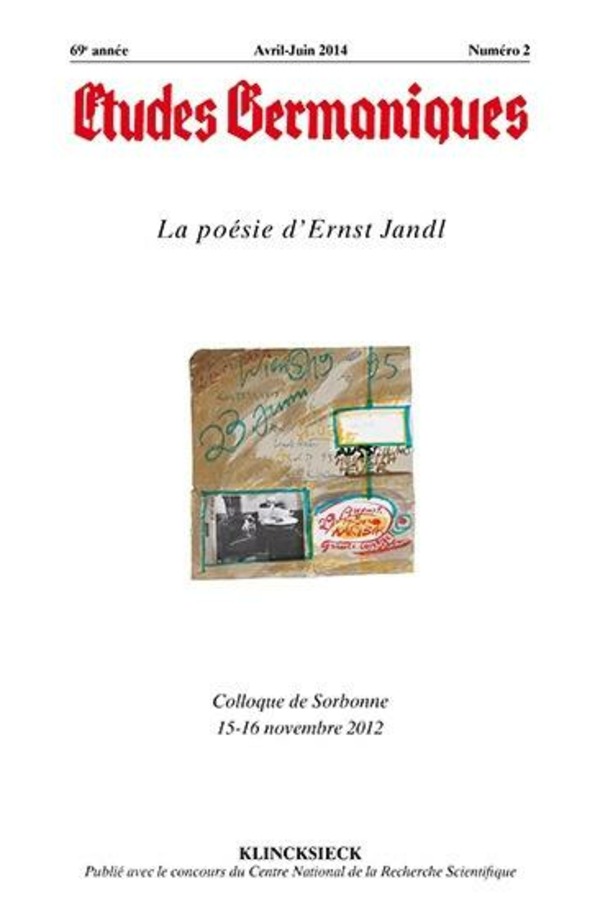
Études germaniques - N°2/2014
La poésie d'Ernst Jandl
RESUMES Laurent CASSAGNAU, Voir le corps de la langue, écouter la langue du corps. Ernst Jandl et la critique du logocentrisme.This article discusses the work of Ernst Jandl from the viewpoint of those twentieth century thinkers who challenge the idea of a transcendent logos, which pervades the Western tradition in...
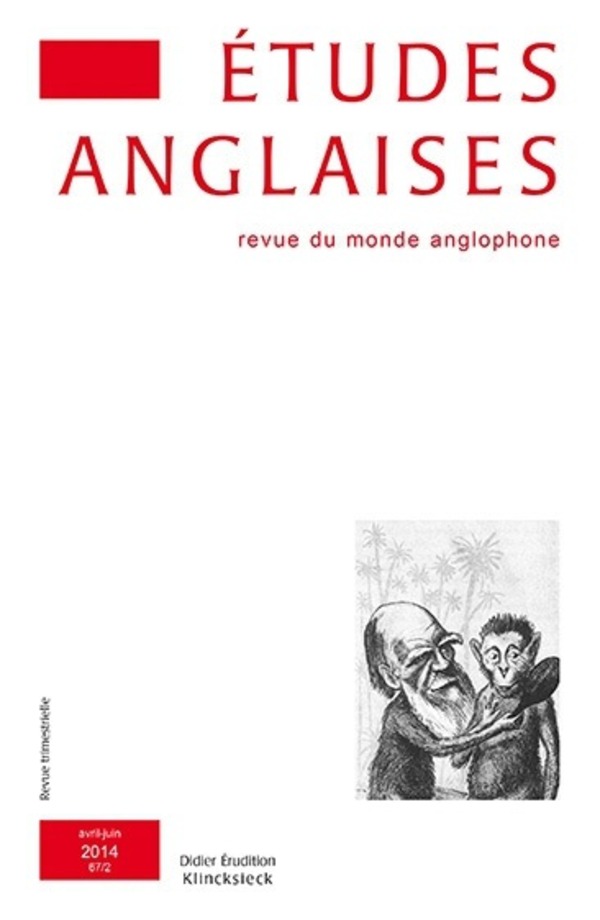
Études anglaises - N°2/2014
Claire BOULARD-JOUSLIN : The making of public opinion in The Free-Thinker (1718-1721): from theory to practice Jean-Michel YVARD : « Oh you Materialist! » : oser publier On the Origin of Species Jason ALLEN : Le corps créole, fonction de la relation dans Drums and Colours de Derek Walcott Sandrine...
Études de linguistique appliquée - N°1/2014
Dialogue et dialogisme dans les textes en classe : approches pluridisciplinaires
Alain Rabatel : Empathie, points de vue, méta-représentation et dimension cognitive du dialogismeRésumé : Dans cet article, est dégagée l'importance du processus empathique, qui consiste à se mettre à la place des autres, à envisager leurs points de vue (PDV), aux plans psychologique, cognitif, méta-réflexif et linguistique. Ces PDV, envisageant...
Études germaniques - N°1/2014
Les classicismes, R. Wagner, S. George, F. Kafka, W. Herzog
René Sternke : Klassikentwürfe als Visionen zur Krisenbewältigung In order to for us to understand the motivation behind classical phenomena, three concepts of classicism are analyzed. Frederick II of Prussia proposes the vision of a German classicism in response to the absence of a German language and literature adequate to...
Études anglaises - N°1/2014
Claire VIAL : Clothing the debate: textiles, text-isles and the economy of gift-giving in four Middle English Breton lays Textiles, both as clothes and elements of the codified knightly costume, play a major structuring role in the Breton lays. Whether embodied in recurring poetic motives or staged in descriptive pauses,...